The plot of Umberto Eco’s novel Foucault’s Pendulum involves two publishers: Garamond and Manutius. Both names refer to figures in the history of printing: Claude Garamond designed the Garamond font in the 16th century, while Aldus Manutius was a famous 15th century printer who invented italic type, a few punctuation marks, and the pocketbook format. This might be a joke because both names are relatable to Apple. The Garamond font was used in Apple’s logo, and Aldus Co. was the original developer of PageMaker (a killer app for the Macintosh) before it was acquired by Adobe.
Turing once dreamed that he was a Turing machine. When he woke up, he wondered if it was him who dreamed of being a Turing machine, or if it was a Turning machine which dreamed that it was Turing - a koan from a programming book published in Taiwan)
What is the shutter speed of human vision? A new paper claims that at extremely low light condition, it can be as long as 0.6 second.
Last week I went to see an optometrist. As he examined my eye with a strong light, I was amazed that I saw an image of the blood vessels on the retina. This phenomenon is called the entoptic image. It was first described by Purkinje about 200 years ago. I read about it in “How we perceive our own retina” by Kuno Kirschfeld (published in Proc. Bio. Sci.)
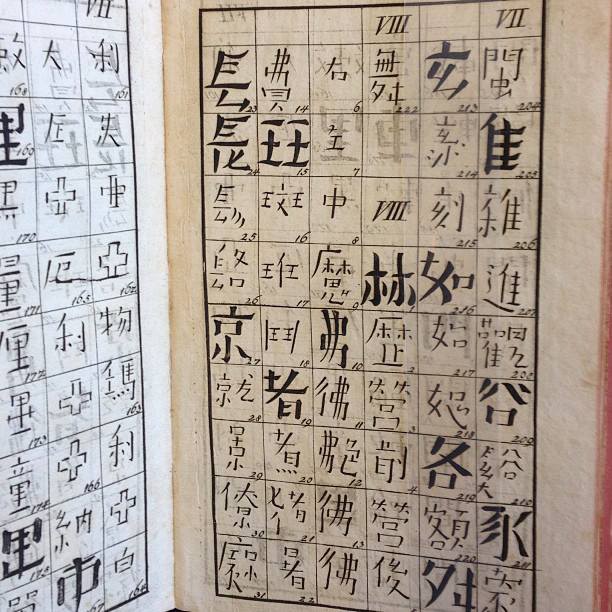
I saw this book in the Melbourne Rare Book Fair. To anyone who can read Chinese, this looks like the practice book of a young child starting to learn to write. The characters are intelligible, but the writer clearly has not mastered the basic principles. If Chinese characters are people, these little guys are seriously deformed. Some have really big heads, some have tiny feet, most of them look like zombies walking with their body parts dangling, ready to fall off.
But this is a serious book. The asking price was over $10,000 AUD. This is Museum sinicum, published in 1730 by German sinologist Theophilus Bayer. Written in Latin, this was the first book about the Chinese language published in Europe.
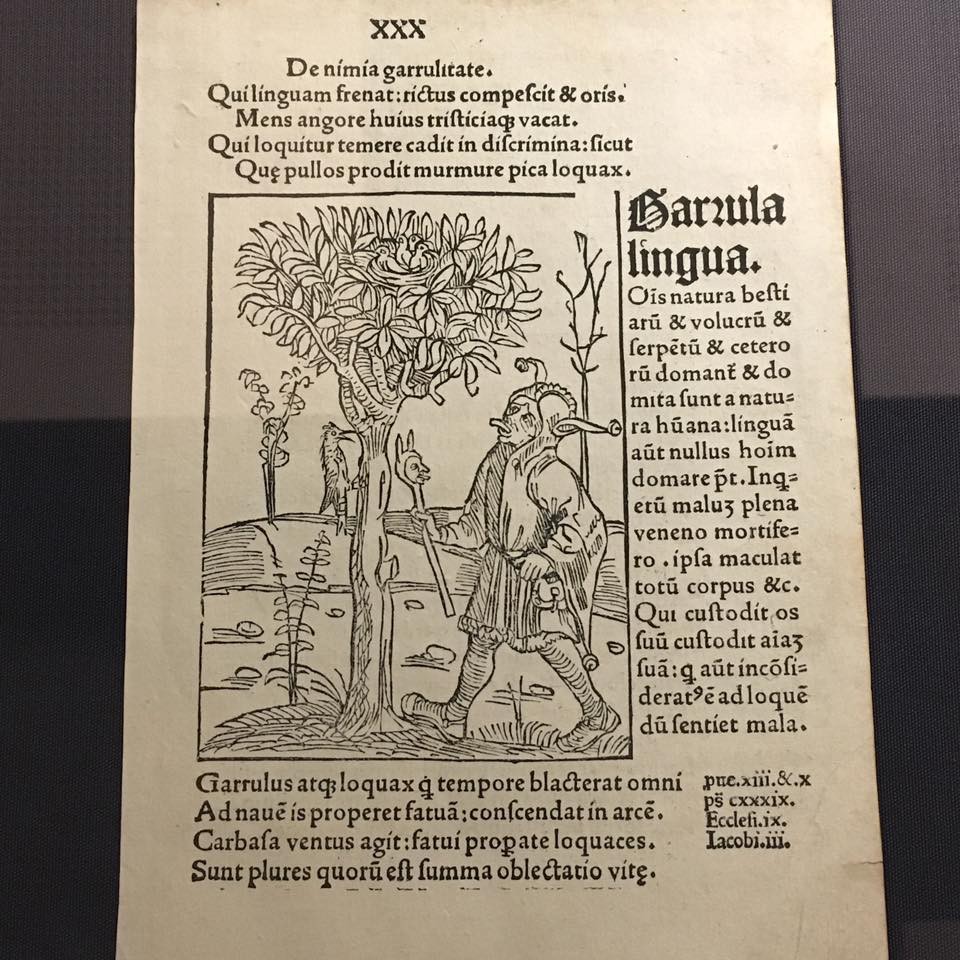
Michel Foucault’s Madness and Civilization opens with the poetic imagery of Ship of Fools. But what is the ship of fools? Apparently it all started with this book. I saw it in an exhibition of books sharing the theme of traveling at the library of Monash University. This is the latin edition of Ship of Fools by German humanist Sebastian Brant, published in 1497. The illustrations are by Albretch Durer (!).
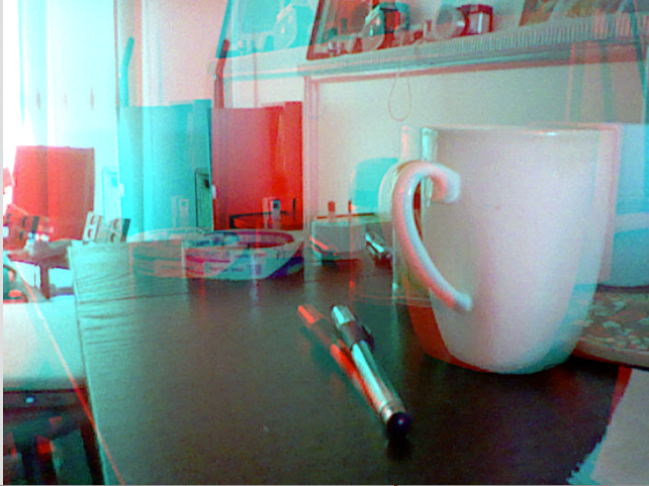
I received a Nintendo 2DS as a gift. The 2DS is a downgraded version of the Nintendo 3DS handheld game console. To cut price (2DS retails at about $150 AUD), Nintendo removed the 3D display but interestingly it still has a pair of front facing cameras. The photos are saved into the .MPO format, and can be loaded and processed by many programs running on computers. I used the XstereO Player on a Macbook Pro to create the Red/green stereogram.
The cameras are only in VGA resolution (640x480). The results are certainly not stunning but they probably can be used for education and home hacking. I find the stereo effect quite convincing.
Have I neglected the backyard garden this much in the last few weeks? This morning when I opened the backdoor, I was surprised to see the grounds covered by mysterious coin-shaped objects. They were clearly seeds — seeds wearing papery, gossamer skirts. Sure, I have seen them before, but not so many all at once.

They parachuted from my neighbor’s golden elm tree - an elm native to northern America. These seeds grow in densely-packed clusters. When the wind blows, some of them break free from the cluster, and tumble down to the ground in complicated spiral trajectories, rolling and whirling as they glide in the air. The skirts, which are mostly flat except for two gentle twists at the tip, are responsible for the complex aerodynamics.
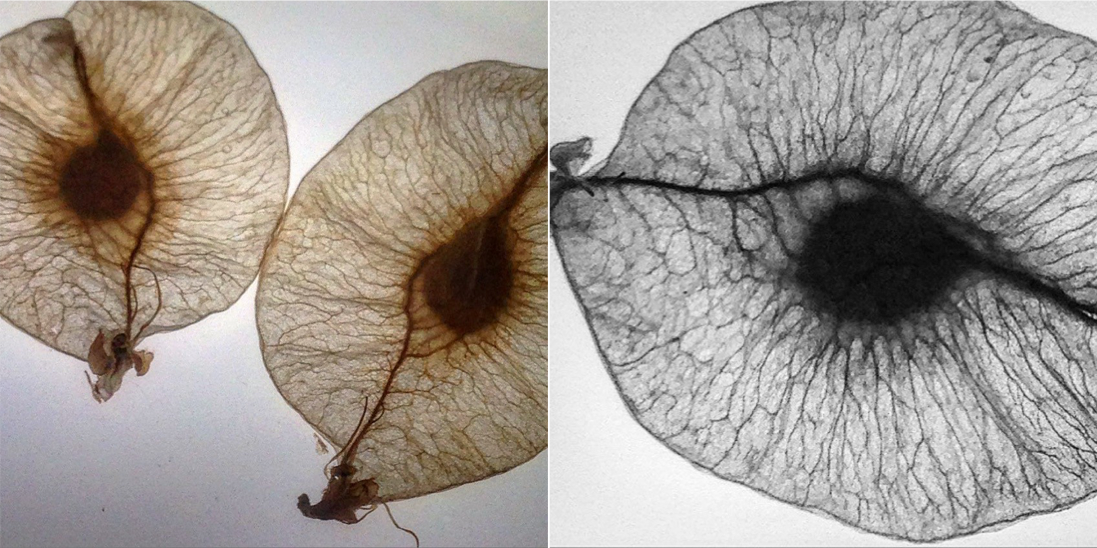
The most curious part of these seeds is obviously the beautiful patterns of the veins in the skirts (samara). They almost look like tiny animals with hearts and circulation systems.
A friend told me about Su Hui’s Star Gauge. It is is a matrix poem composed in the 4th century by the Chinese poetess Su Hui. The characters are arranged in a 29x29 matrix. The submatrices can be read in different directions, producing (apparently) 3000 poems.
The reason of the unreason with which my reason is afflicted so weakens my reason that with reason I murmur at your beauty - Don Quixote
What was the first time that we know that non-human animals have color vision? From what I can find, the first person who scientifically came to that conclusion was John Lubbock in 1888. What was so strange about it was that he studied Daphnia - a plankton (!). He discovered that the plankton was attracted to yellow light, but not to white light. Lubbock also reasoned that insects must have color vision, but was not able to scientifically demonstrate it. It was decades after Lubbock published his book, in 1914, that Karl von Frisch established the behaviour training method for testing color vision. Very soon after, German scientists applied the von Frisch method to every animal that they could get their hands on.
Apparently, before the late 19th century, it was simply assumed that animals don’t have color vision.
What is known as the visual cortex today was thought to be the site of “philoprogenitivty” (parental love) in phrenology.
Really. Hey, like Godzilla always sez to Mothra — why don’t we go eat some place? — Inherent Vice by Thomas Pynchon
Choose your next private key carefully, Mr. Bond. It may be your last. Do you expect me to talk? No. I expect you to prime.
No worries, it’s on the house, as the TV antenna man always sez — Thomas Pynchon in Inherent Vice